
The AI Productivity Reckoning: Who Captures the Value When Intelligence Gets Cheaper?
The AI boom is reaching a more demanding phase. Capability still matters, but the financial question is becoming unavoidable: how much economic value survives after the technology has been purchased, integrated, supervised and used?
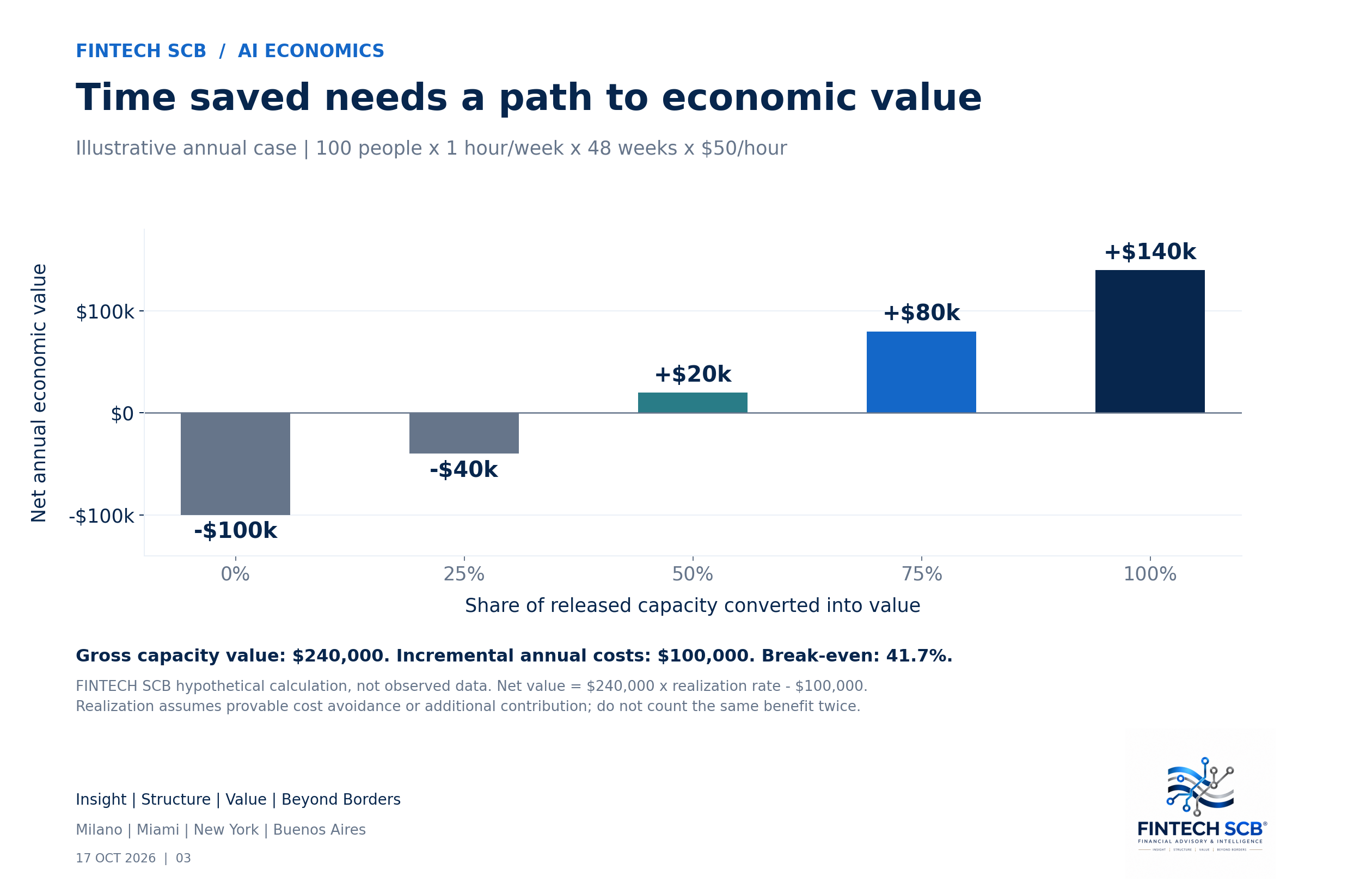
A company can generate more documents, write more code and process more requests while earning little additional profit. It can also spend more than planned and create an exceptionally valuable business. The difference lies in the relationship between resources consumed and outcomes customers or the organization actually value.
McKinsey’s July 2026 interview with Stanford economist Erik Brynjolfsson, “Is the AI productivity story at a turning point?”, provides a useful starting point. Its central argument is that substantial gains require changes to processes, skills and organizational design. Installing a model leaves much of that work unfinished.
The financial implication deserves more attention. AI adoption creates an opportunity. Management determines whether that opportunity becomes an asset, a recurring expense or an expensive distraction.
The figures circulating alongside this debate need careful handling. McKinsey’s enterprise AI FinOps research reported budget overruns among 93% of its 75 qualified respondents across five industries. Its observation of spending rising nearly fourfold concerned the transition from isolated applications to enterprise adoption; it should not be read as a universal annual growth rate. Budget overruns alone establish neither investment failure nor negative returns. (mckinsey.com)
A separate McKinsey global survey, published in August 2026, found that 80% of respondents reported improved personal productivity, while 37% reported a positive contribution from AI to enterprise EBIT. Those are self-reported answers to different questions. They cannot be converted into an audited return on investment or a precise rate at which personal gains become corporate profits. (mckinsey.com)
They nevertheless frame a question that every board should ask: where, exactly, does the value go?