
THE AI BETWEEN YOU AND THE WORLD
How Artificial Intelligence Is Moving From Helping Consumers Choose to Choosing for Them
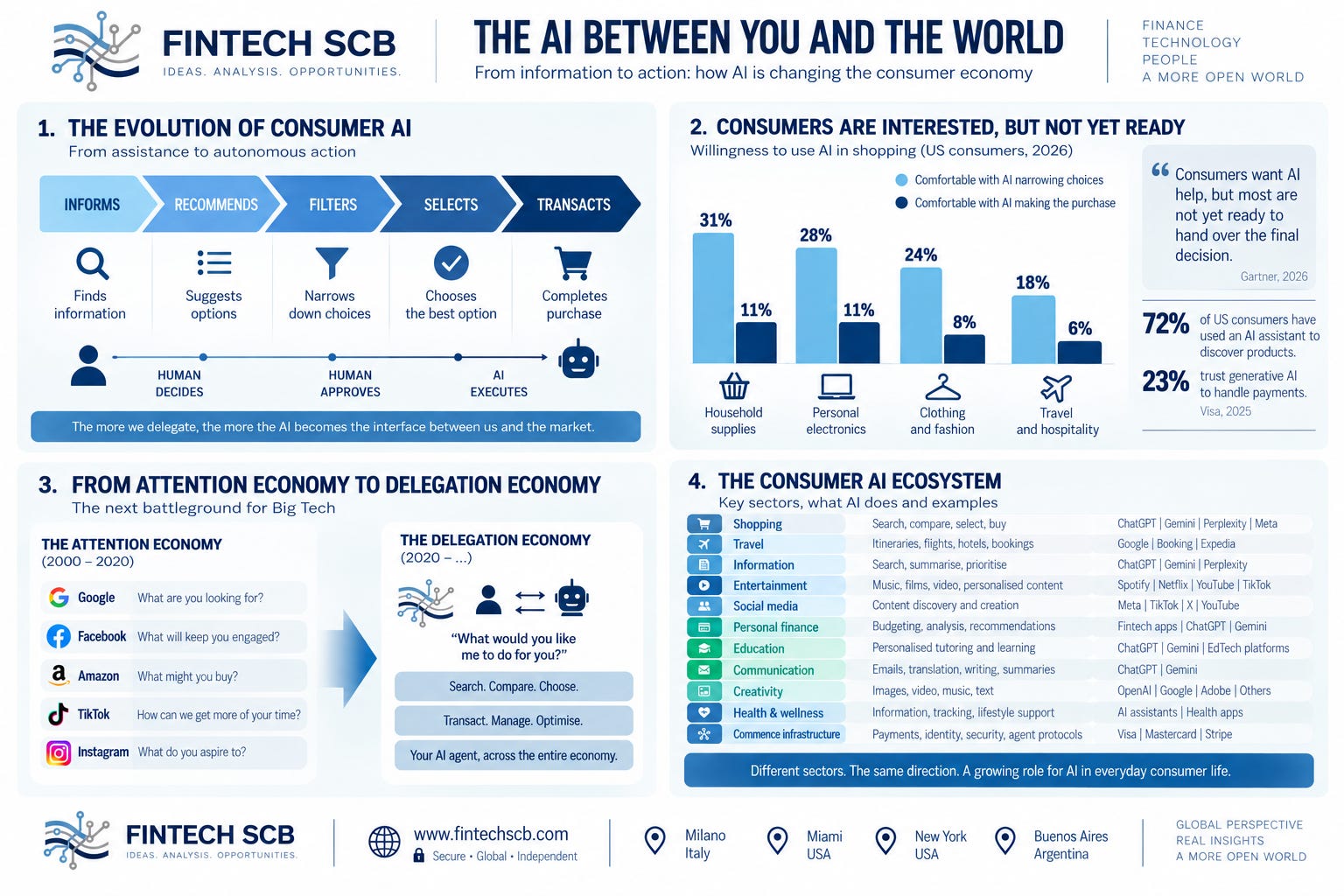
For most of the digital age, artificial intelligence has worked quietly behind the screen.
It decided which advertisement appeared first, which movie Netflix recommended, which video TikTok placed in front of us, which product Amazon ranked higher, which song Spotify played next and which result Google considered most relevant.
AI influenced our choices.
But, at least formally, we still made them.
We searched. We compared. We clicked. We bought.
That distinction is beginning to disappear.
The next phase of consumer artificial intelligence is not simply a better chatbot. It is an agent: software capable of understanding an objective, navigating digital services, comparing alternatives and increasingly taking actions on our behalf.
The difference sounds technical.
Economically and socially, it is enormous.
We are moving from:
“Help me decide what to buy.”
toward:
“Decide what I should buy.”
And eventually:
“Buy it for me.”
That seemingly small progression could alter e-commerce, advertising, search, social media, payments, influencers and perhaps something much more fundamental: the relationship between human beings and the act of choosing.
This is the beginning of what the technology and payments industries increasingly call agentic commerce.
And it may represent the transition from the economy of attention to something even more powerful:
the economy of delegation.
1. From chatbot to economic agent
The first generation of generative AI primarily produced information.
Ask a question. Receive an answer.
The emerging generation can increasingly perform a sequence of operations.
Imagine telling an AI:
“Find me a pair of running shoes under $120 suitable for someone who runs 30 kilometres a week. Compare professional reviews and customer feedback, exclude sellers with poor return policies, find the lowest reliable price and buy the best option.”