
Revolut’s Asian Expansion: Why Indonesia Deserves the Next Bet
The Philippines, the Gulf and the economics of a global financial network.
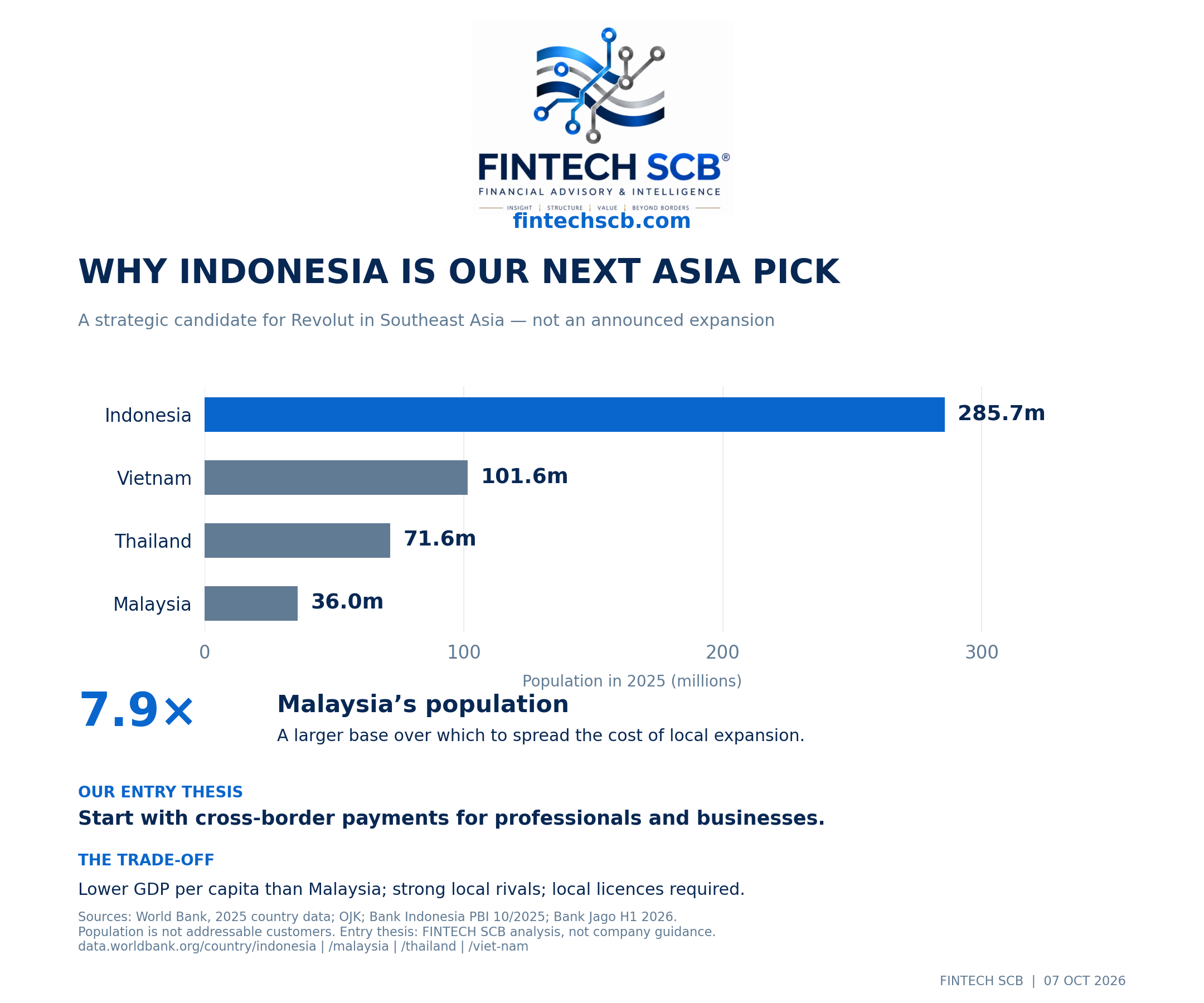
Revolut’s proposed expansion into the Philippines raises a question that extends beyond its next launch: can a European financial platform build a durable advantage by connecting customers across Asia, Europe and the Gulf?
The opportunity is substantial. So are the differences between these markets.
Singapore provides an established regional presence. Japan demonstrates experience operating within a distinct domestic regulatory system. India offers a vast market with its own payment infrastructure. The Philippines combines recurring international remittances with increasing digital adoption.
Indonesia could add exceptional scale. Saudi Arabia could strengthen the Gulf side of international payment relationships.
Each market would contribute something different. Their combined value would depend on how effectively Revolut connects them.
Revolut already has an Asian foundation
Among European neobank peers such as N26, Monzo and bunq, Revolut is ahead in establishing an Asian customer footprint.
It launched in Singapore in 2019 and Japan in 2020. In India, it received authorisation in 2025 to issue prepaid payment instruments, including cards and wallets with UPI functionality, and has been rolling out its offering.
This experience matters. International expansion requires local payment connections, customer support, regulatory relationships and operational knowledge that cannot be reproduced simply by translating an app.
Nevertheless, Revolut’s permissions differ across jurisdictions. Its Japanese presence should not be described as a full banking licence, while its Indian prepaid-payment authorisation is different from permission to operate a full-service bank.
The Philippine announcement requires the same precision. The government’s October communication describes a proposed wholly owned local entity and the evaluation of digital banking and electronic-money licensing routes. It does not establish that a banking licence has already been granted.