
PASSIVE INCOME, ACTIVE ILLUSIONS
From laundromats and self-service dog washes to rental properties, vending machines, digital products and investment portfolios: what the evidence actually says about buying financial freedom.
https://fintechscb.com
The most expensive word in small-business marketing may be “passive”.
Attach it to a laundromat, a vending machine, a holiday apartment or an online store, and an ordinary commercial activity becomes something much more seductive: a way to escape dependence on wages without assuming the daily responsibilities of running a business.
The attraction is understandable. People facing expensive housing, uncertain employment and pressure on household budgets are looking for greater financial security. They want income that continues when they stop working. They want a reserve against redundancy, illness or retirement. Some simply want their evenings and weekends back.
The danger begins when that legitimate aspiration becomes a sales argument that conceals how the income is actually produced.
A machine can accept a payment automatically. A platform can process an order while its owner sleeps. A tenant can pay rent by standing instruction. None of these facts establishes that the underlying investment generates an adequate return after maintenance, financing, replacement costs and the market value of the owner’s work.
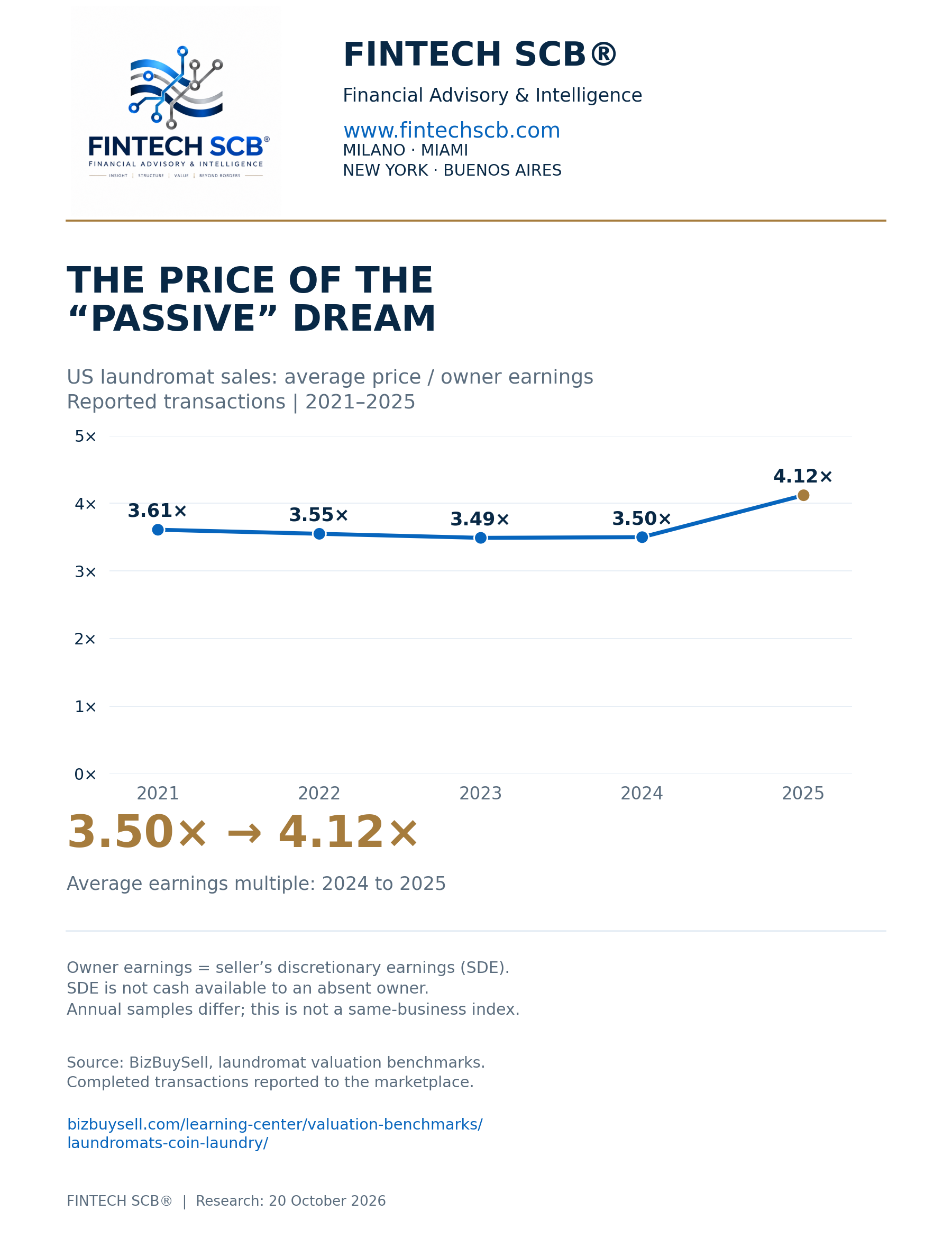
The Wall Street Journal’s reporting on people who bought laundromats after encountering easy-money narratives online offers a useful starting point. It describes the distance between the business presented on social media and the business experienced by its owners: repairs, customers, security, staffing and operating problems.
The broader question extends far beyond laundromats.
What exactly are people buying when they purchase “passive income”? A financial asset? A small business? A second job? A claim on a platform’s future traffic? Or an expensive package sold by someone whose own income becomes secure as soon as the buyer signs?