
Inflation Before the Oil
Prices arrive first
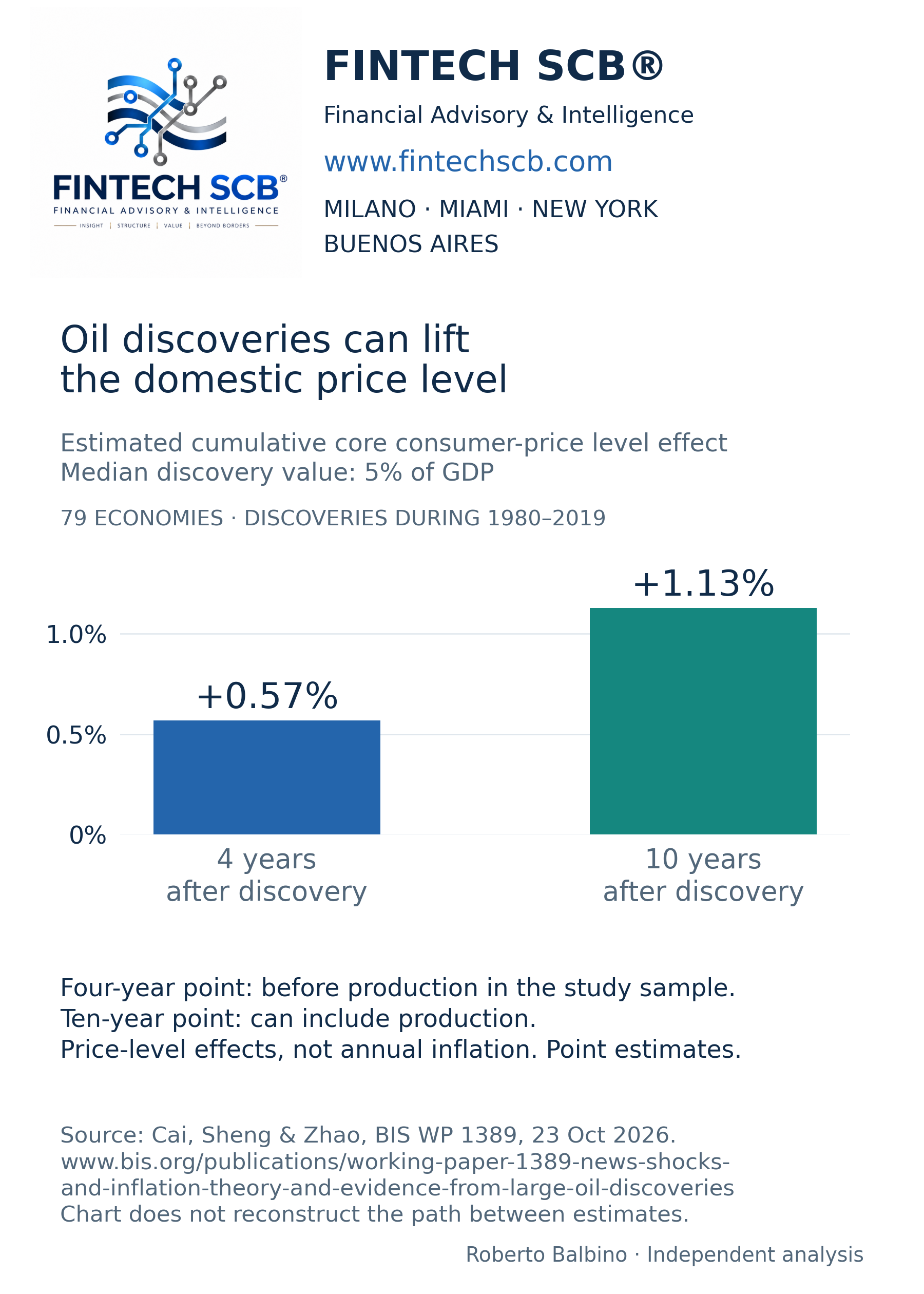
Imagine a coastal town receiving extraordinary news. A commercially promising oil field has been discovered offshore. Engineers will arrive. A port may expand. The government talks about roads, schools and a different economic future.
Commercial production is still years away.
The town's landlords do not necessarily wait. A property owner expects future tenants with larger budgets. A contractor bids for land. A bank considers lending against the prospect of rising activity. A young worker begins training for the energy sector. A government ministry commissions a project.
There is no new stream of petroleum revenue available to distribute yet. There is already a new set of prices, expectations and commitments.
For a household that rents its home and works outside the emerging industry, the first experience of national wealth may be a higher living cost.
This is an illustrative town, not a report of a particular discovery. It captures an economic mechanism that deserves more attention: credible expectations about future income can change present behaviour before the productive asset starts delivering that income.
The political celebration concerns what the country may eventually earn. The economic adjustment can begin much sooner, and its benefits and costs need not reach the same people.
What the new research says
A BIS working paper published on 23 October 2026 studies 1,309 large oil and gas discoveries across 79 economies during 1980–2019. For a discovery with a median estimated value of 5% of GDP, the estimated cumulative increase in the core consumer-price level is 0.57% after four years and 1.13% after ten. [1]