
The Next Five Years Will Not Look Like the Last Five
Where Should Investors Look Now — and How Should They Diversify?
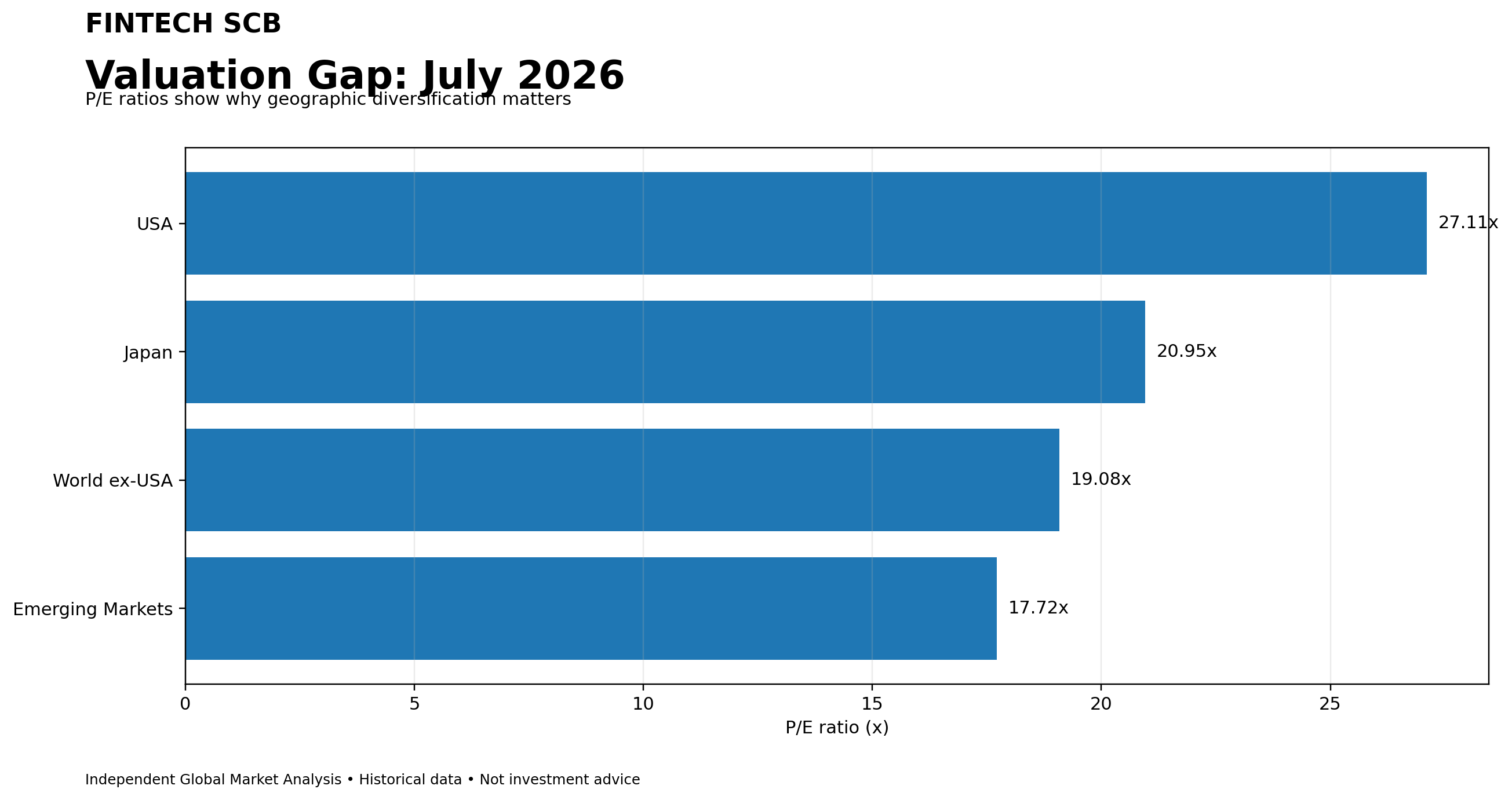
The last five years rewarded investors who understood one simple reality: the United States was the dominant engine of global equity performance.
Technology, artificial intelligence, digital infrastructure, extraordinary corporate profitability and the depth of U.S. capital markets created a powerful combination.
But investors should be careful with one of the most dangerous assumptions in financial markets:
what worked yesterday will automatically work tomorrow.
The investment environment of 2026 is very different from the environment investors faced at the beginning of the decade.
U.S. equities remain essential. But valuations are considerably higher than in many other parts of the world. Japan is undergoing a structural transformation. Emerging Markets are trading at lower valuations while offering significant long-term growth potential. Bonds once again offer meaningful income. And gold has become an increasingly important instrument for diversification in an environment dominated by geopolitical uncertainty.
The question for the next five years is therefore not simply where returns have been highest.
The real question is:
Where can investors find the best combination of growth, valuation and diversification?
The United States: Still the Core, But No Longer the Whole Story
There is no rational reason to abandon the United States.
The American economy remains the world’s most important financial market and one of the strongest innovation ecosystems.
Artificial intelligence, semiconductors, cloud computing, software, biotechnology and digital infrastructure continue to attract enormous amounts of capital.
American companies also benefit from high profitability and access to the deepest capital markets in the world.
But there is a problem.